

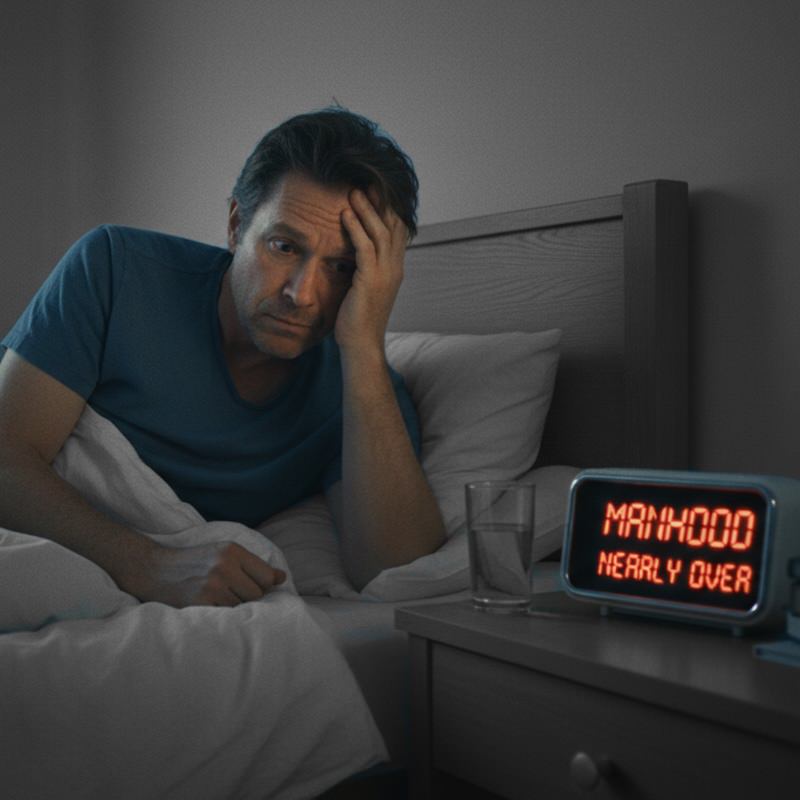
You woke up this morning with the same alarm, drank the same coffee, and took the same commute. Yet something felt a little “off”. Truth be told you have been feeling that way for a while now but struggled to put a name to it. It’s Wednesday, so no point blaming it on the beers you shared with a friend watching the Grand Final on Sunday.
A quick systems check. You’ve traded off a little muscle for a bit more belly, the libido isn’t quite what it used to be, and your mood swings like the market. Welcome to andropause, my friend. It’s real and, as we approach midlife, it’s coming in hard. Best we get prepared, then, so we know what we are dealing with.
The facts
In medical terms it’s more precisely known as late-onset hypogonadism, also known as the gradual decline of testosterone (and sometimes other androgens) in midlife men. Testosterone levels begin to decline from around age 30–35, by about 0.4% to 1.3% per year in various studies.
Unlike the abrupt hormone drop women experience in menopause, men’s decline is slow and steady. The term “andropause” is misleading in that sense. Symptoms may include reduced libido (yeah, it’s a thing), fatigue, loss of muscle mass, increased fat around the midsection, mood changes, poor sleep, and even lower bone density. So yes: it is real. But also: it’s not as neat, dramatic or universal as the term “male menopause” implies.
Why it matters
You might be tempted to shrug this off as “just aging” (and you’re not wrong). But here’s why giving this topic a little serious airtime makes sense:
- Quality of life: Fatigue, low mood, low libido, loss of muscle — these are not mere “grumbles”. They impact how you feel about yourself and your life.
- Health impacts: Low testosterone and the changes associated with it (more fat, less muscle, worse metabolism) are linked with increased risks: cardiovascular disease, type 2 diabetes, osteoporosis.
- Hidden nature: Because the decline is gradual and the symptoms vague, many men and doctors treat them as “just middle age” or “stress”. The “why am I so tired” complaint becomes accepted as normal. The UK’s National Health Service website warns that in many cases the term “male menopause” is misleading because many symptoms may relate to lifestyle, not hormones.
Stigma, silence and isolation
As men, we might not talk about it. If we’re feeling less “manly” (whatever that means), or embarrassed by reduced performance, or else wondering “where did my mojo go”, there is a decent chance we are going to try to might hide it, blame it on work, diet, aging, rather than admit this may has a medical side. That silence can increase stress.
How to destigmatise
On the positive, because it’s slow, and because lifestyle interventions can help, and because there are perfectly legitimate medical options, this isn’t “doom, end of story”. We can act. Here are a few pointers.
First, let’s normalise the conversation: Say it out loud: “Hey, have you heard of this thing called andropause?” Drop it in conversation with mates like you would about losing hair or getting new glasses. Andropause is affecting one in two men in midlife. It might not be the most comfortable conversation, but you’ll find you are not alone.
Be curious, not ashamed: Asking “Why am I feeling crap lately?” is better than burying the question under more caffeine or denial. Avoid macho silence. Not everything that goes wrong is about “toughing it out”. It’s fine to check in on how you’re doing physically and emotionally with your doctor. The world still expects men to be stoic, but I prefer agency.
The visit to your local GP may feel a little awkward but she or he has had the conversation countless times, so just speak plainly. If humour helps, (“My testosterone called in sick”) then great, but best to tell it straight. There is no judgment, but there are potential solutions. Your GP might talk about testosterone replacement therapy, although she / he will likely want to do some blood tests first to check on existing levels, as well PSA markers and the like to ensure there are no unintended risks. It’s worth getting the facts so you can make an informed decision, together.
And yes, there are medications that help with performance. And yes, they work. You just have to be open and honest with your GP. We all recognise that intimacy with our partner is an important part of any relationship, alongside kindness, communication and championing our partner like a lion. Don’t let andropause get in the way of that.
Better still involve your partner. This isn’t just “my issue”. If you’re in a relationship, your mood, libido, and energy all impact your partner, too. They might well be going through their own issues, or else feeling like they are walking around on eggshells when they are with you, so let them know. This helps to change the narrative. Again, it’s about agency. Instead of “I’m old/worn-out”, try “I’m evolving, and I want to do it well”. Shift from decline to transition. That shift is a hall mark of healthy longevity.
There’s no universal cutoff that defines “andropause” for every man. Some men with “low” testosterone feel fine; others with “normal” levels don’t.
According to the European Male Ageing Study and other large trials, low testosterone is real, but how much of symptoms are caused by it (versus lifestyle, comorbidities) is still under discussion.
There are plenty of other things we can do even if we don’t fancy a quiet chat with our GP, which broadly fall under lifestyle. Exercise (especially strength training), healthy diet, good sleep, managing weight. These have big effects on testosterone and symptoms.
First steps
Here’s a “what to do” list you can bring to your next coffee break (or quiet mid-week moment) to start taking charge:
- Self-check the signs
- How’s your energy compared to five years ago?
- Libido: is it lower, or is the issue elsewhere (stress, relationship, sleep)?
- Muscle mass: are you losing strength despite gym or active lifestyle?
- Belly gaining, despite “same diet”?
- Mood, sleep: increased irritability, insomnia, brain-fog?
If yes to several, then note them. Refer to them next time you see your GP. Track it.
- Book the check-up
- Talk with your GP. Mention you’re concerned about “age-related hormone decline”.
- Ask for morning testosterone test (but don’t eat just before).
- Get basic health screens: blood sugar, lipids, liver/kidney, thyroid, PSA (if applicable). I take these tests every year, not because I am worried but because I want to proactively manage myself while I am still fit and healthy.
- Lifestyle overhaul (yes, again)
- Strength training 2-3 × per week: Resistance training boosts testosterone, muscle, mood.
- Sleep 7–8 hours: Poor sleep = lower testosterone + worse recovery.
- Diet: protein, whole foods, minimise ultra-processed, keep alcohol in check.
- Weight management: excess body fat converts testosterone into oestrogen; lowers free testosterone.
- Stress reduction: chronic stress suppresses hormones; build in mindfulness, downtime.
- Partner/friends talk
- With your partner: “I’ve noticed I’m not quite myself. My hormones might be part of it. Could we talk about how I’m feeling, and how it impacts us?”
- With friends: more casual: “Don’t laugh, but I’m doing a hormone-check.” You might be surprised how many are in the same boat.
- Avoid blaming: It’s not “you make me feel” but “I’m feeling less than I used to and I am working on it.”
- If diagnosed and starting TRT/medical support
- Set realistic goals with your doctor: improved mood, energy, libido; don’t expect superhero status.
- Monitor regularly: testosterone levels, PSA/bone density (if relevant), red-cell counts, cardiovascular checks.
- Be patient: some effects take months (e.g., muscle, bone).
- Continue lifestyle work: TRT isn’t a licence for junk food or no exercise.
Learning to love midlife
Andropause, low-T, whatever you call it, is not as a decline you must passively accept, but a transition you can navigate with awareness, humour, allyship, and action.
You’re not broken. And you’ve definitely not lost it. You’re aging. And by acknowledging it, you’re doing better than “quietly suffering”.
Get curious. Get checked. Don’t let the old man in.
