

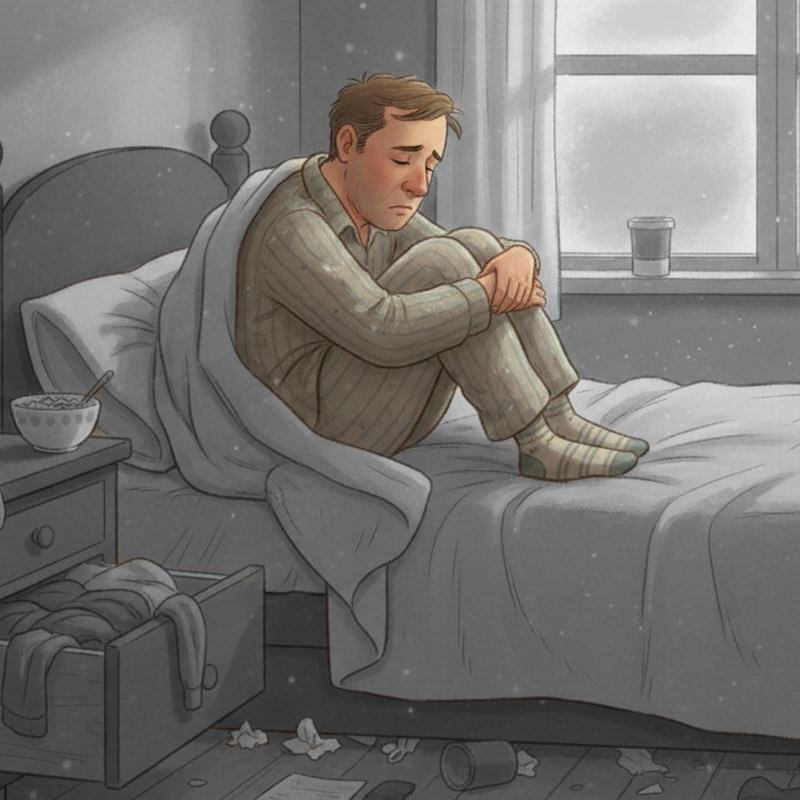
“The proper function of man is to live, not to exist. I shall not waste my days in trying to prolong them. I shall use my time.” Jack London
“Deaths of despair” is a term that refers to an increase in mortality rates from suicide, drug overdose, and alcohol-related liver disease, particularly among certain demographic groups. The phrase suggests that these deaths stem from a common underlying cause: profound despair and hopelessness rooted in a range of socioeconomic factors.
When we hear “deaths of despair,” we imagine young people: drugs, suicides, collapsing communities. It’s the story we’ve told ourselves about a society cracking at the edges. But what if that story’s incomplete? What if despair has simply moved up the age curve — quietly setting up camp among people, especially men, in their forties and fifties?
That’s the uncomfortable question raised by John Burn-Murdoch in a recent Financial Times article, where he analyses so-called “deaths of despair.” His data suggests something that hits closer to home: despair doesn’t just haunt the marginalised, it stalks the middle-aged, the seemingly successful, the ones who’ve “made it.”
Beneath the data, a mirror
Burn-Murdoch’s charts show that across income levels, Americans die earlier than their peers in other developed countries, even the well-educated and well-insured. The data shows that the issue isn’t just healthcare. It’s the erosion of social connection, purpose, and trust.
In short: it’s not about what’s in the bloodstream. It’s about what’s missing from the soul.
Midlife: The Quiet Epicentre
By midlife, the world assumes we’re sorted. Career, family, mortgage, purpose, all the boxes checked. But inside, something subtler begins to fray. We start to feel it:
- The job that once felt like a climb now feels like a treadmill.
- The kids don’t need us quite as much.
- The body stiffens.
- The “What now?” questions grow louder.
And we drown them out with work, screens, or one more glass of wine. That’s not crisis. That’s pre-despair — and it’s the most dangerous kind.
“The greatest hazard of all, losing one’s self, can occur very quietly in the world, as if it were nothing at all.” — Søren Kierkegaard
What the Numbers Reveal
Burn-Murdoch’s data show the “deaths of despair” curve isn’t limited to the young or the poor. Mortality from external causes (suicide, drugs, alcohol) is rising fastest among adults aged 35 to 54.
In the U.S., life expectancy for the working-age population has stalled or reversed, not just in neglected towns, but across the board. Even professionals now live shorter lives than their European counterparts. Again, the data reveals this isn’t about access to hospitals. It’s about access to meaning.
Why Midlife Men Are Vulnerable
- Identity Erosion
When our worth is tied to our title, our paycheque, or our role as provider — what happens when those start to wobble? Midlife forces that question. Most men avoid it until it’s too late. - Disappearing Connection
Friendships thin out. Work becomes the only social hub. Then one reorg or retirement later, the ground gives way. Loneliness doesn’t kill fast. It kills quietly. - The Health Debt
Years of stress, bad sleep, poor diet, and quiet drinking add up. Midlife is when the interest starts compounding. - Economic Anxiety
The “I should have made it by now” illusion crashes into reality, such as the cost of living, aging parents, uncertain futures. Even success feels fragile.
The Three Big Myths
- 1. “It’s a youth problem.”
Wrong. The slow unravelling often starts in midlife, hidden behind paycheques and polite smiles. - 2. “It’s about healthcare.”
Also wrong. It’s about social architecture, and how communities hold (or fail to hold) people when purpose thins out. - 3. “More money fixes it.”
Only if money buys connection and meaning, which it doesn’t. Economic security without purpose just makes the despair more comfortable.
The Midlife Reset
If you’re reading this in your 40s or 50s, here’s the playbook for not letting the old man in:
Redefine success.
Stop measuring life by ladders and start measuring it by aliveness. Curiosity, contribution, connection, that’s your new ROI.
Rebuild your tribe.
Men need other men. Not drinking buddies, but rather truth-telling buddies. Reconnect, reach out, rebuild the social muscle.
Reclaim your body.
Not for vanity, but for sovereignty. Strength is sanity. Move daily. Eat like someone planning to live.
Rediscover purpose.
You don’t need to climb higher, you need to deepen. Mentor, build, create, volunteer, serve. Midlife purpose is horizontal, not vertical.
Speak out loud.
Silence is despair’s favourite weapon. Talk to your mates, your partner, a therapist, your dog, me, anyone. Don’t let your thoughts ferment in private.
“Midlife is when you reach the top of the ladder and find that it was against the wrong wall.” Joseph Campbell
The Real Lesson in Burn-Murdoch’s Charts
Even after correcting a data error (it’s not that 70% of midlife deaths stem from despair, but that nearly half of the excess mortality gap does), the message stays stark: Despair is not marginal, it’s mainstream.
It’s the mid-career engineer, the small-business owner, the divorced father, the burned-out executive. It’s the men who once had direction but lost velocity. The ones who confuse endurance for purpose.
And yet, this is the most salvageable phase of life. Because midlife, at its core, isn’t decline; it’s redesign.
Don’t Let the Old Man In
Burn-Murdoch’s analysis isn’t a death sentence. It’s a mirror.
It says: wake up. Despair is preventable, but only if we stop pretending it’s someone else’s problem.
The old man, that voice whispering “It’s over, just coast”, waits for our permission. Don’t give it to him.
Reclaim curiosity. Rebuild connection. Redesign meaning. That’s how we outrun the old man, not with denial, but with depth.So don’t let the old man in.
Not today. Not yet.
