I have the privilege to chair the IFS Foundation. When people ask me what the IFS Foundation is, I often start with something simple.
We help kids in rural Sri Lanka get access to a decent education. We do so in the knowledge that education creates better health and wellbeing outcomes for individuals, their families and entire communities.
Today I want to share how the IFS Foundation started, what it means to me and why it matters. Hopefully it shines a light on how these things work. Perhaps it will inspire someone to reach out in partnership. Or maybe, best of all, it will spark an idea for someone to start something new.
The IFS Foundation didn’t appear out of nowhere in 2020, even though that’s when it was formally created as a group of independent charitable organisations in the UK, US, Sri Lanka and Canada.
The roots go back to the long, historic relationship between IFS and Sri Lanka. IFS has had operations in Sri Lanka since 1997 and has grown to become the country’s largest technology employer. Back in 2018, when I joined the company, many of us inside IFS felt a sense of responsibility. We weren’t just operating in Sri Lanka. The country and its people were central to our success.
IFS, alongside its partners, suppliers and customers, relies on the work performed there every day, whether it’s R&D, global support, shared services and much more besides. IFS has invested billions in Sri Lanka since it first opened an office in Colombo, and today employs thousands of people.
In this context, the idea that “we should be giving something back” stopped being a nice sentiment and started becoming a serious conversation. We felt a keen sense of responsibility to strengthen our social license to operate, to pay our part.
In 2019, employees in Sri Lanka and around the wider IFS community began organising and funding community projects in rural areas. Renovating schools and public facilities, improving access to clean water, and supporting local families. Those early efforts showed us three things:
- The need in rural communities was real and acute.
- A relatively modest investment (the right project, done well) could change hundreds of lives.
- We needed a proper structure if we wanted to do this seriously, transparently and sustainably.
Education, the greatest weapon we have to change the world
In 2020, the IFS Foundation was formally established as a group of independent charities with a shared mission, to give kids access to a decent education. A few key principles emerged:
1. Sustainable development is the priority. We don’t just “service issues”; we stay long enough to make structural change. Our model is built around multi-year partnerships, not one-off gestures.
2. Community leadership is critical. We work with communities, not on them, listening to local leaders, teachers, health workers and families. We hold space for dialogue, and help create what they value. In this way we serve as “useful outsiders”.
3. The power of the collective. We deliberately set out to create an independent entity, and worked hard to secure diverse income streams. This has never been about IFS cutting a tax-deductible cheque, although it does provide support in many ways. Rather it is about the collective fundraising efforts of staff, customers and partners, harnessing our global fundraising potential to generate real impact. Human and authentic.
It is working
Education is a non-negotiable outcome. If children can access quality schooling — with water, sanitation, safe buildings and digital skills — then everything else becomes possible: health, employment, dignity, and choice.
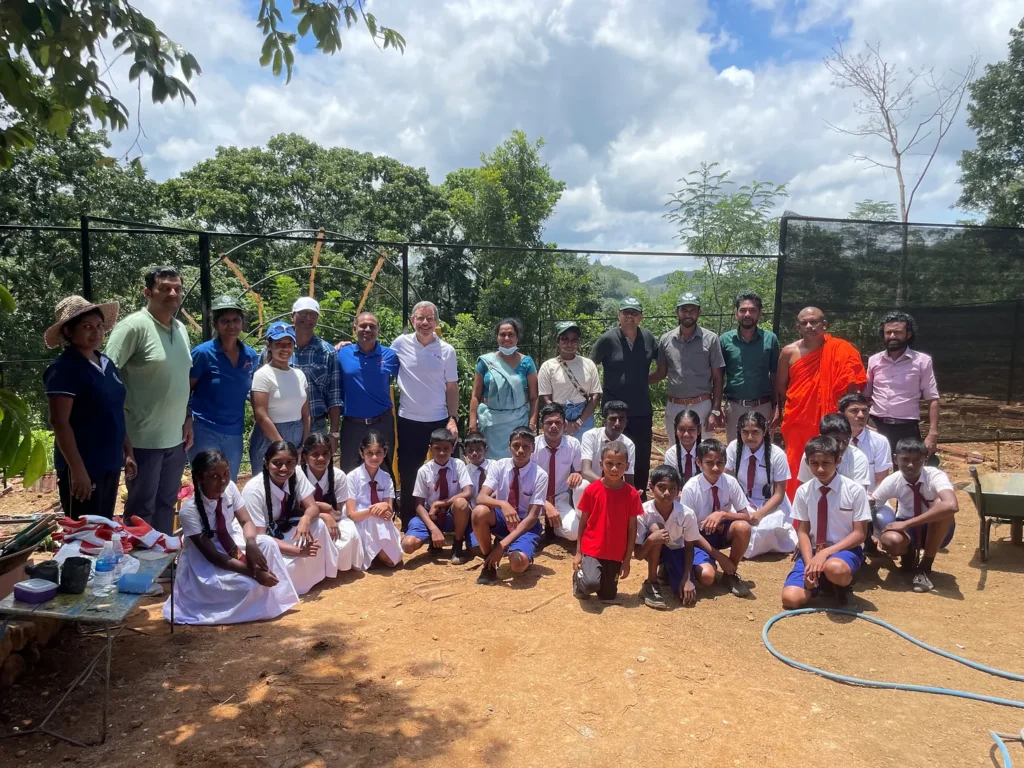
We started our work in Welusumanapura, a group of villages in the North-West of Sri Lanka with around 2,500 people living in just over 700 homes, many surviving through subsistence farming and manual labour. Access to basic services was limited.
Fast forward to today, and school capacity has doubled, attendance rates are through the roof, and the school topped divisional results for o-level. It boasts the only computer lab in the district and learning is extended to a-level. Healthcare infrastructure upgrades, reverse osmosis water treatment plants and new sanitation facilities, as well as the creation of dozens of local jobs, made this possible.
From 2022, having proved the model, we expanded to a second site in Weralugahamula, continuing the same long-term partnership approach: a minimum of three years working side-by-side with the community to build something that can stand on its own.
What it means to me
The IFS Foundation is my way of honouring a country and a set of communities that have given so much to our company and our people, and of making sure our “thank you” is more than just words. Sri Lanka is a beautiful, peaceful and resilient community.
The formal description of my role says I was involved in the early work in Sri Lanka, prior to the formation of the Foundation, and that I was a founding member of the charity. What it doesn’t say is how personally confronting it can be to stand in a village where:
- children share a single aging classroom across multiple year groups, with limited facilities and no guarantee of a meal that day
- families walk long distances for safe water,
- and small, preventable problems — dental issues, contaminated water, pregnancy complications — can become life-changing or life-ending.
When you see that up close, “corporate social responsibility” stops being a phrase in a slide deck. It becomes a very direct question: Given what you have, what are you going to do? For me, the IFS Foundation is the answer to that question.
On a personal level, this work keeps me grounded. It reminds me that true leadership as a business isn’t measured only in revenue or market share, but in how deliberately we use our position to improve lives we might never personally meet.
Why it matters (now more than ever)
Sri Lanka has been through a deeply challenging period in recent years. The IFS partnership with the IFS Foundation isn’t a “nice-to-have”. It’s a commitment to being a responsible neighbour and proud community participant. This is true of our wonderful sponsoring partners also, including Hoist, Platned and IGT 1. Shared values in action.
Together we focus on the foundations of a dignified life. Our projects are deliberately basic and practical:
- Clean water: tube wells, reverse-osmosis plants and purification systems to ensure families can drink, cook and wash safely.
- Sanitation: toilets in homes and public facilities, including disabled access and school sanitation to keep girls in education beyond puberty.
- Healthcare: renovating medical centres, maternity and neonatal care facilities, and ensuring clinics are stocked and usable.
- Education and STEM: building and equipping computer labs, improving classrooms, and supporting STEM skills so young people can access modern, better-paid jobs.
- Employment and entrepreneurship: creating local jobs and skills so communities can become truly self-sustaining.
These aren’t abstract interventions. They are the things that decide whether a child goes to school or works, whether a mother can access safe care, whether a family must choose between food and medicine.
We measure success in autonomy, not dependency. From the beginning, the Foundation’s strategy has been to partner with communities for a minimum of three years, with a clear aim: by the time we step back, the community should be more autonomous, more resilient and less dependent on us.
Our projects are aligned with the United Nations Sustainable Development Goals, which keeps us focused on long-term change rather than short-term optics. We connect global resources to local wisdom. The Foundation brings together:
- the scale and reach of the IFS workforce, its suppliers, customers and other corporate partners, including organisations who care about Sri Lanka just as much as we do,
- the commitment of trustees and volunteers across the UK, US, Canada and Sri Lanka,
- and, crucially, the knowledge and leadership of local Sri Lankan communities themselves.
That combination means we can raise funds globally, apply strong governance and transparency, and then direct those resources where they’ll have the greatest impact, as defined by the people who live there.
Why it matters to me personally
The IFS Foundation matters because it changes the question we ask ourselves as leaders, colleagues and human beings. Instead of: “How much can we extract from the places where we operate?” We ask: “Given the privilege, skills and resources we have, how much can we return?”
Each of us have the opportunity, and the responsibility, to give something back to the communities that enable us to thrive. For me, the IFS Foundation is that “something back” made real:
- It’s a promise to Sri Lankan communities that they’re not invisible.
- It’s a commitment to do the hard, unglamorous work — building toilets, fixing wells, renovating clinics, funding labs — that quietly transforms lives.
- And it’s a reminder that when we align business success with human dignity, we don’t just grow a company; we grow a better story about who we are.
The IFS Foundation is the greatest gift to ever come my way in my professional life. The opportunity to help make the world a slightly better place, through sustainable community development, has been a wonderful source of learning, meaning and purpose. Many friendships have been formed.
It has helped strengthen IFS’ social license to operate in Sri Lanka. It is regularly cited as a reason why people choose to join the company. Data points to higher employee engagement among those who volunteer their time in support of the Foundation, and lower voluntary attrition. Call it enlightened self-interest if you will. The work creates value just as it sustains our core values. Long may it continue.
What to make of all this
Maybe you’re thinking about how you can contribute as an individual. Maybe you represent a corporate keen to explore social responsibility. If so, I hope this article proves useful. If you want to find out more, or talk through your own ideas, please drop me a line.
But most of all, this article is my way of saying thank you to everyone who has shown any measure of support for the work we do, especially those communities we have the privilege to serve. Too many to list here. You know who you are. Bohoma Sthuthi.
